Travel Spots in Gifu & Mie
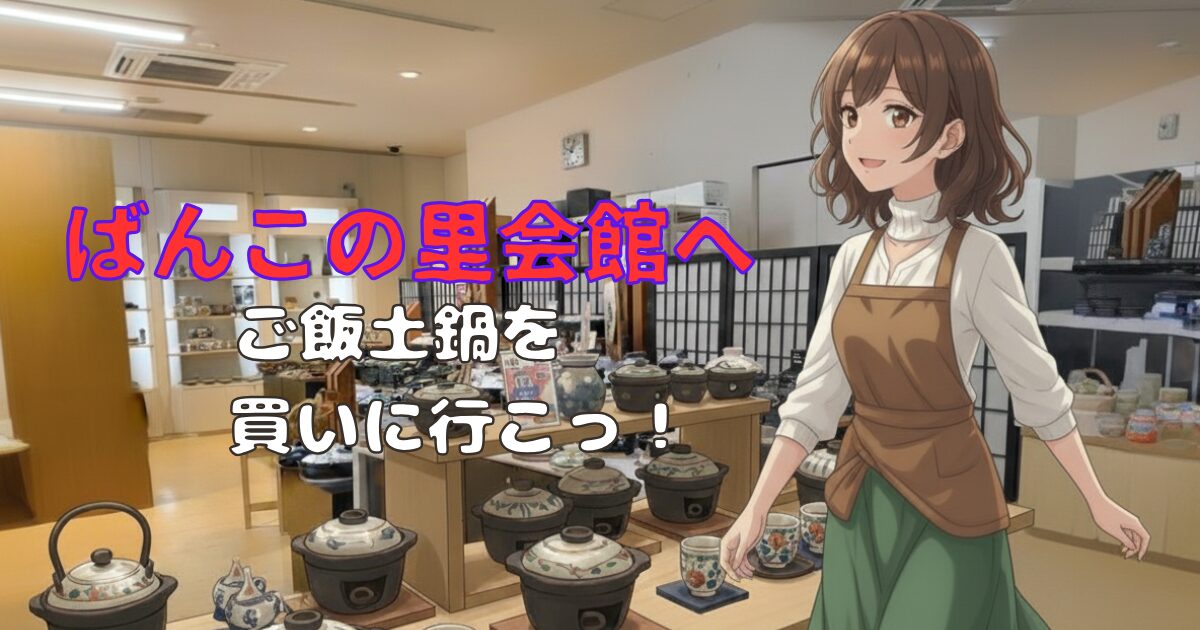
I recently visited “Furusato Kobo Utsuwa-tei” inside Banko no Sato Kaikan in Yokkaichi, Mie Prefecture, and picked up a specialized clay pot (donabe) that cooks the most incredible rice!
To be honest, I was never a huge fan of plain white rice. Since I was a kid, I always needed toppings like natto, kimchi, or furikake to enjoy it. However, during the 2024 rice shortage when “reserve rice” (older stock) was common, my wife, Chii, told me: “I heard a clay pot can make even old rice taste amazing!” So, we decided to give a Banko-yaki rice donabe a try.

Wow! This is delicious! Too delicious! Is fresh white rice actually supposed to taste this good?!”

I’ve always loved rice, but wow… (munching)… The grains are so firm and the sweetness is incredible!
Even the older “reserve rice” we had at the time tasted better than fresh rice cooked in a standard cooker. Since then, even when we buy premium new rice, we always reach for the clay pot whenever we have the time.
In this article, I’ll show you how a Banko-yaki pot can make any rice—new, old, or even long-stored—taste like a gourmet meal!
The Secret to Perfect Rice: Banko-yaki Donabe
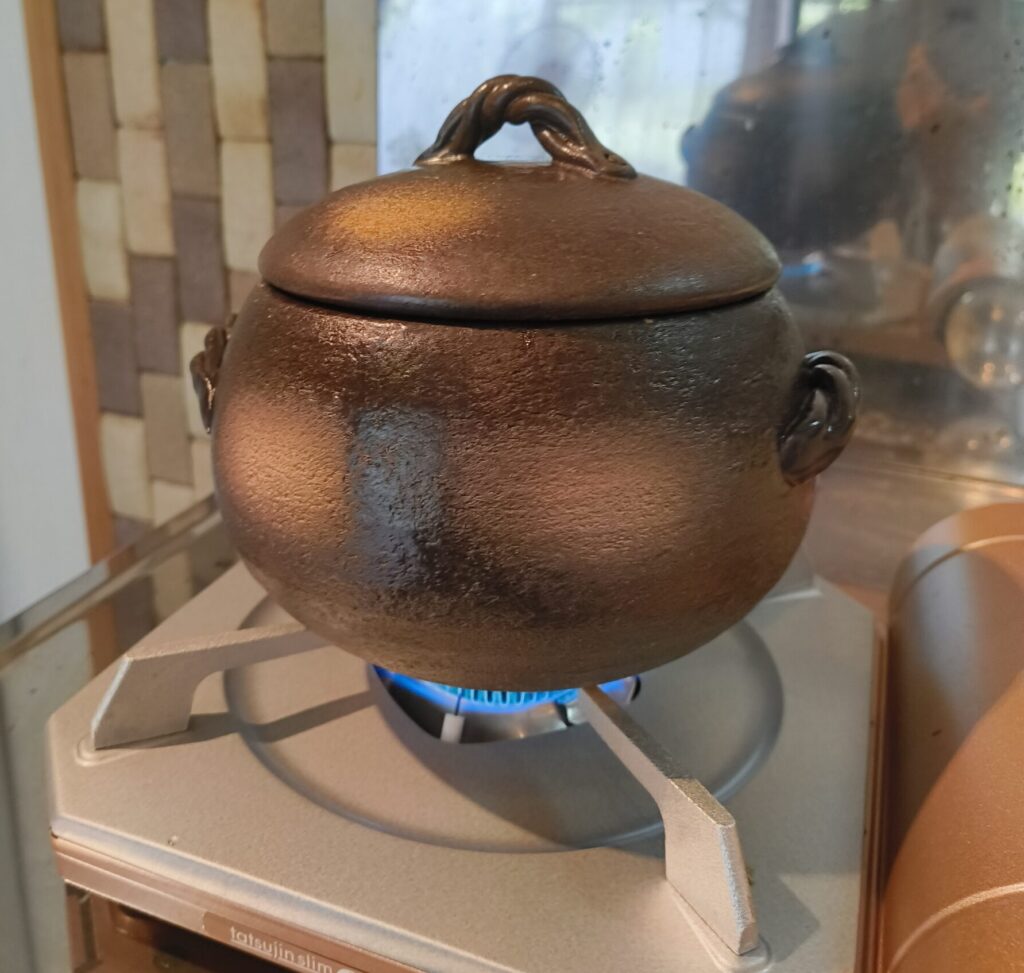
When you first start, adjusting the heat on your stove can be a bit tricky. Every stove is different, and water temperature changes with the seasons. I still occasionally have “boil-overs” when I’m not careful.
It takes a little more effort than pushing a button, but it is so worth it.
How to Cook “New Rice” (Shinmai)
Usually, your donabe will come with a manual. For fresh “new rice,” following those standard instructions will result in fluffy, sweet, and perfectly textured rice.
How to Cook “Old/Stored Rice” (Kokokomai)
Through trial and error, we found that older rice needs a bit more hydration. Here is our “house style” for a 3-cup (approx. 450g) batch:
- Rinse & Soak: Rinse 3 cups of rice. Soak it in 600ml of water in a separate bowl for 20–60 minutes.
- Transfer: Move the rice and water into the donabe.
- High Heat: Set the stove to medium-high for about 10 minutes. Aim for a heat level that brings it to a boil in exactly 10 minutes.
- Manage the Boil: It will likely boil over a little if you are cooking at max capacity—don’t panic! Just wipe it quickly or slightly offset the lid for a second to let steam escape. Don’t leave the stove unattended!
- Low Heat: Once it boils, turn the heat to the lowest possible setting for 3 minutes. If you want “Okoge” (delicious scorched rice at the bottom), leave it a minute longer.
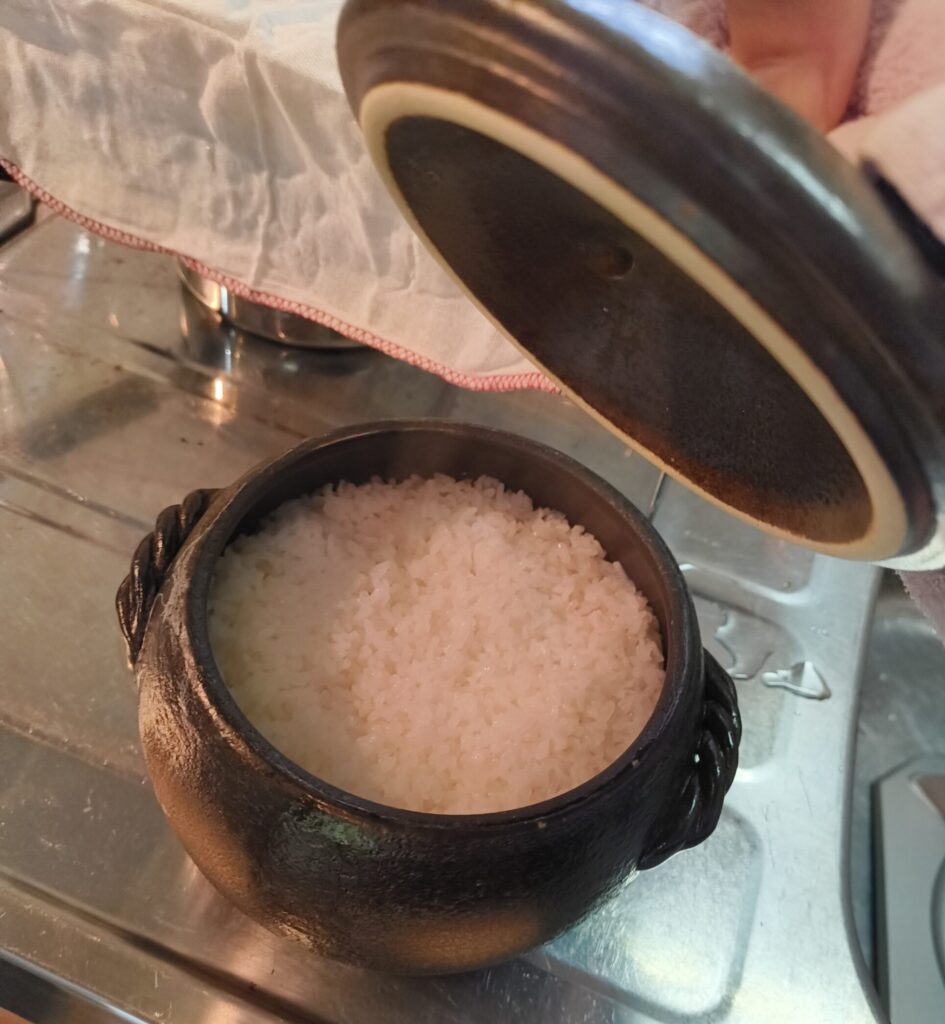
- The Golden Rule: Turn off the heat and let it steam for 20 minutes. DO NOT open the lid during this time.
- Serve: Open the lid (careful, it’s hot!), fluff the rice with a spatula, and enjoy!
Clay Pot vs. Electric Rice Cooker
We own a mid-range pressure IH rice cooker ($200–$300 range), but the difference is night and day.
| Feature | Banko-yaki Donabe | Electric Rice Cooker |
| Texture | Firm, individual grains with a glossy finish. | Softer, more uniform texture. |
| Flavor | Concentrated sweetness and aroma. | Standard, consistent flavor. |
| Control | Can create “Okoge” (crispy bottom). | Mostly automated; less control. |
| Convenience | No timer; requires manual heat control. | One-touch; has “Keep Warm” & timer. |
Pros & Cons of the Donabe
Pros:
- Superior Gloss: Each grain literally shines.
- Enhanced Sweetness: You’ll want to chew longer just to savor the flavor.
- Customizable: You can adjust the “doneness” to your liking.
- Better Leftovers: It doesn’t develop that “electric cooker smell” even when cold.
Cons:
- Learning Curve: You might burn a few batches or have a messy stove at first.
- No “Keep Warm”: It’s meant to be eaten fresh (though it stays warm for a while).
- No Timers: You can’t set it to be ready the moment you wake up.
- Fragile: It’s ceramic; if you drop it, it will break.
Visiting “Banko no Sato Kaikan”
If you want to buy your own, I highly recommend visiting the source in Yokkaichi.
Access
- By Car: About 20 minutes (8km) south of the Yokkaichi Interchange on the Higashi-Meihan Expressway.
- Note: The parking lot is on the northeast side of the building; you can’t enter the parking lot directly from the front entrance.
The Experience: Finding the Pot
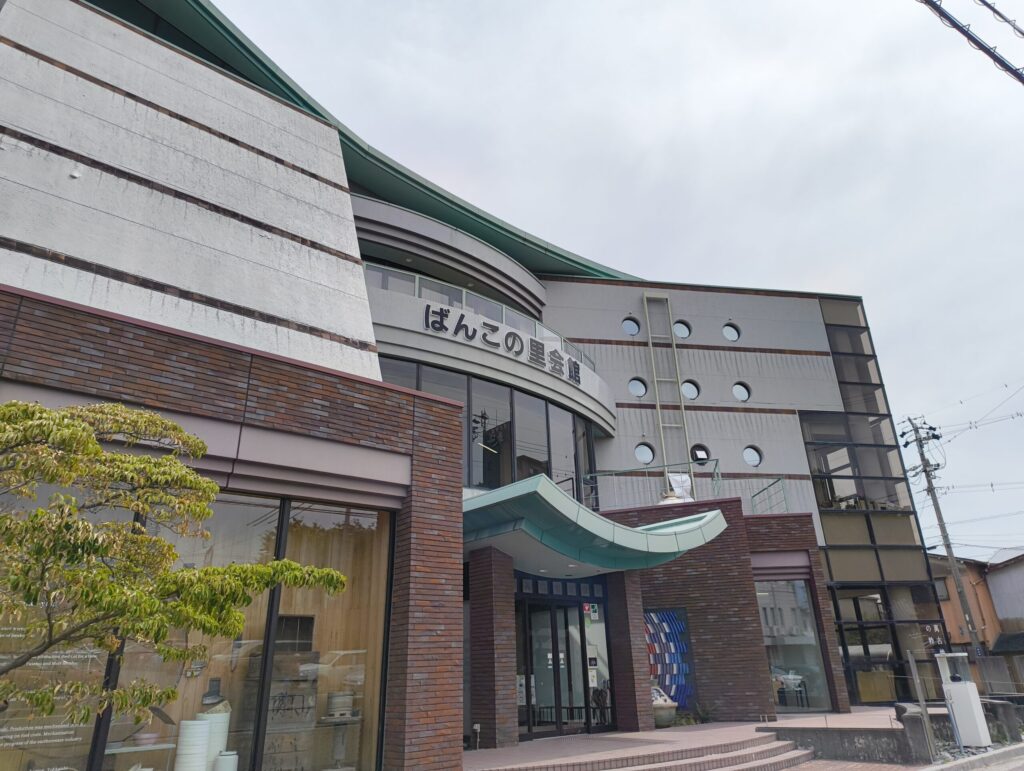
We originally searched for “pottery kilns in Gifu/Mie” and accidentally ended up at a factory! A kind worker told us, “We only manufacture here; if you want to shop, go to Banko no Sato Kaikan.”
When you enter, you’ll find:
- 1st Floor: Exhibition Hall and Pottery Workshop.
- 2nd Floor: “Furusato Kobo Utsuwa-tei” (The Shop) and a Japanese restaurant called “Aikawa.”
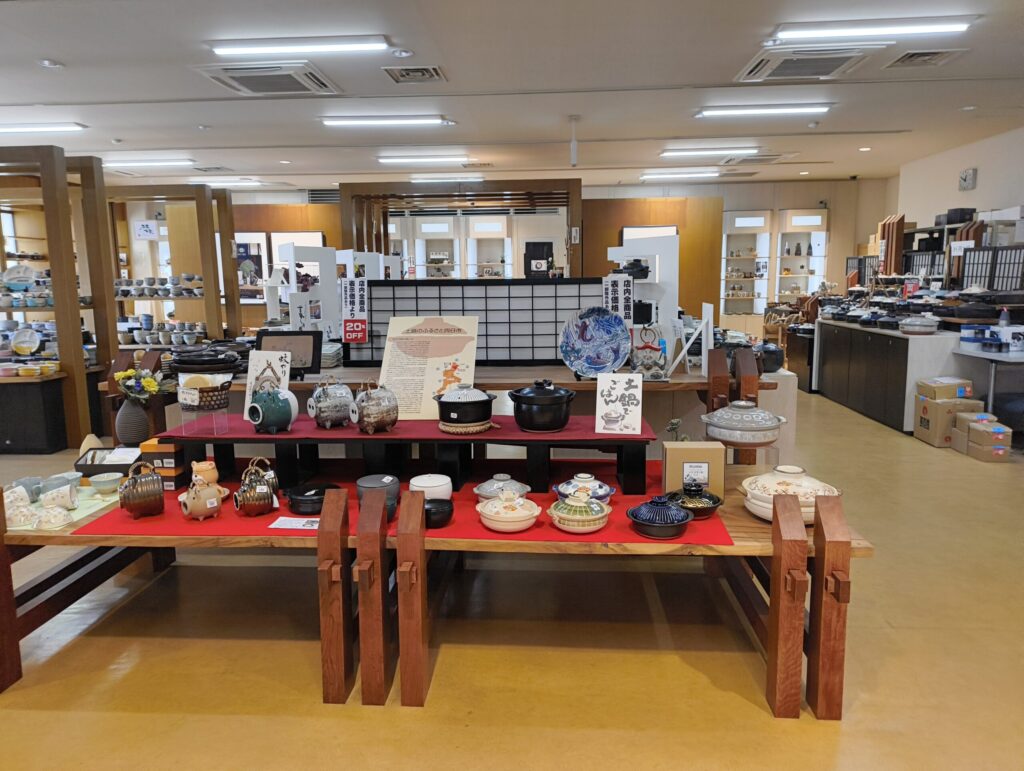
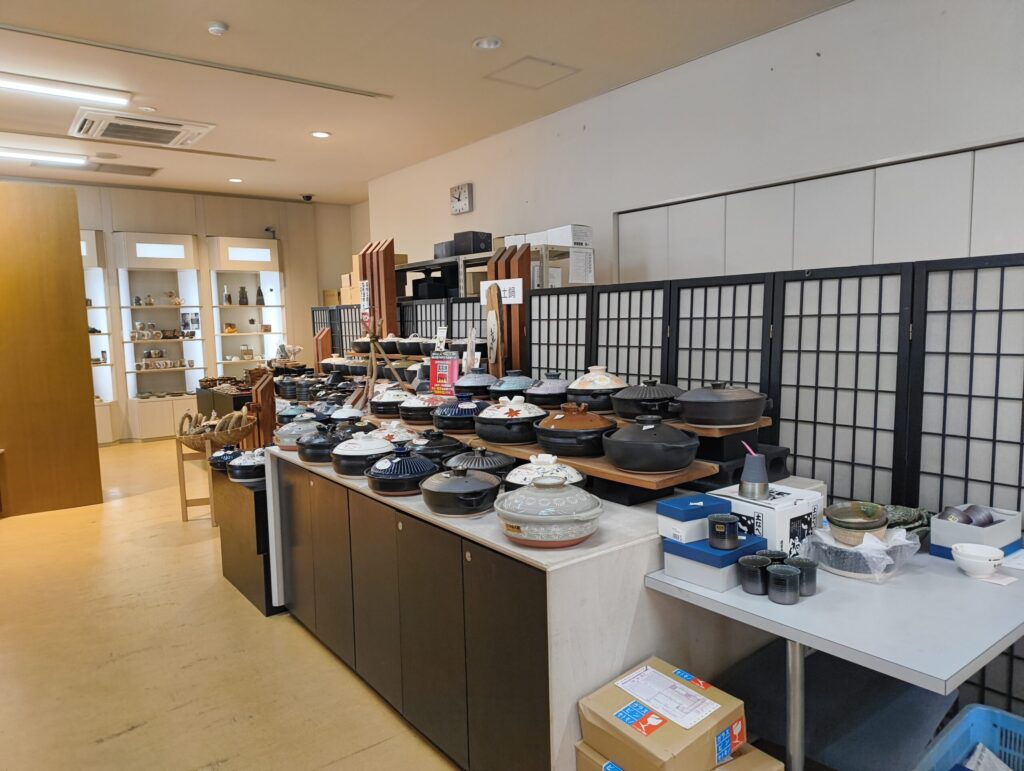
The shop is filled with everything from traditional clay pots to modern mugs and lucky cats. The staff are incredibly helpful. When I asked if I should get a 5-cup pot just in case I want to cook more, they advised: “If you usually cook 3 cups, get the 3-cup pot. Rice tastes best when cooked in a pot sized specifically for that amount.”
Other Facilities
- Pottery Workshop: You can take classes here (reservations required).
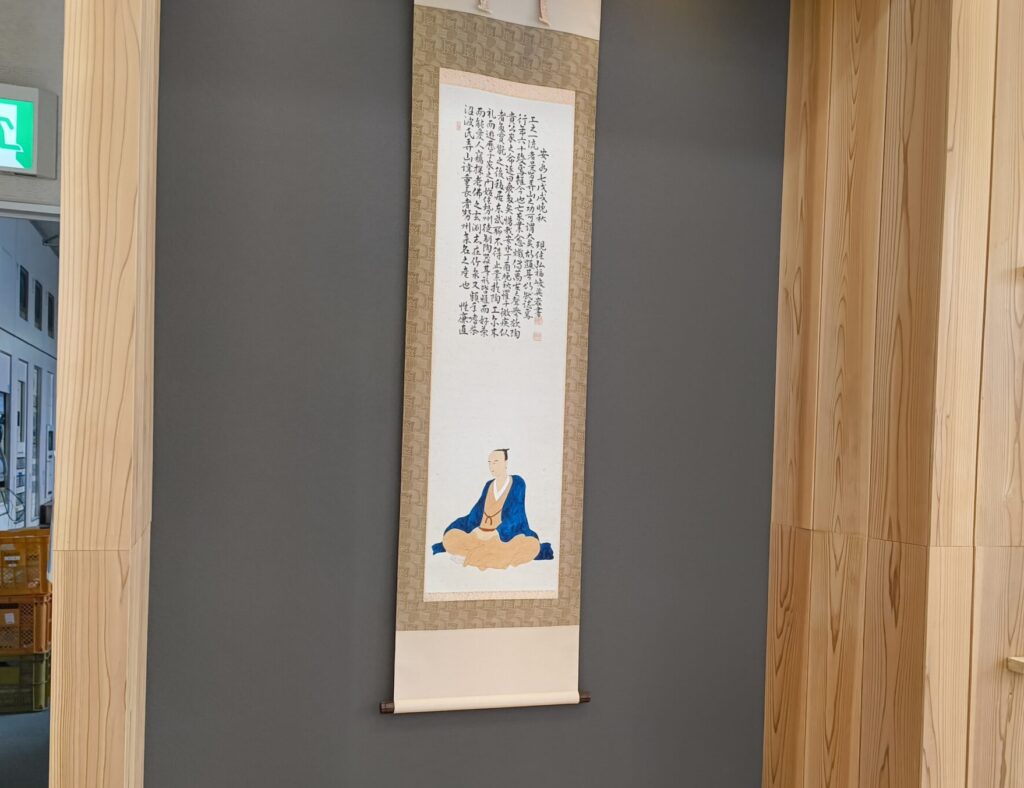
- Exhibition Room: Learn about the history of Banko-yaki dating back to the Edo period.
- Restaurant “Aikawa”: A great spot for lunch, but it’s very popular. I recommend calling ahead to book a table!
Final Thoughts
A donabe isn’t just a cooking tool; it’s a way to make every meal feel special. Since buying our pot, even our daily tea time feels more intentional and enjoyable because we use the mugs we picked out there.
If you love rice, you owe it to yourself to try cooking it in Banko-yaki!